
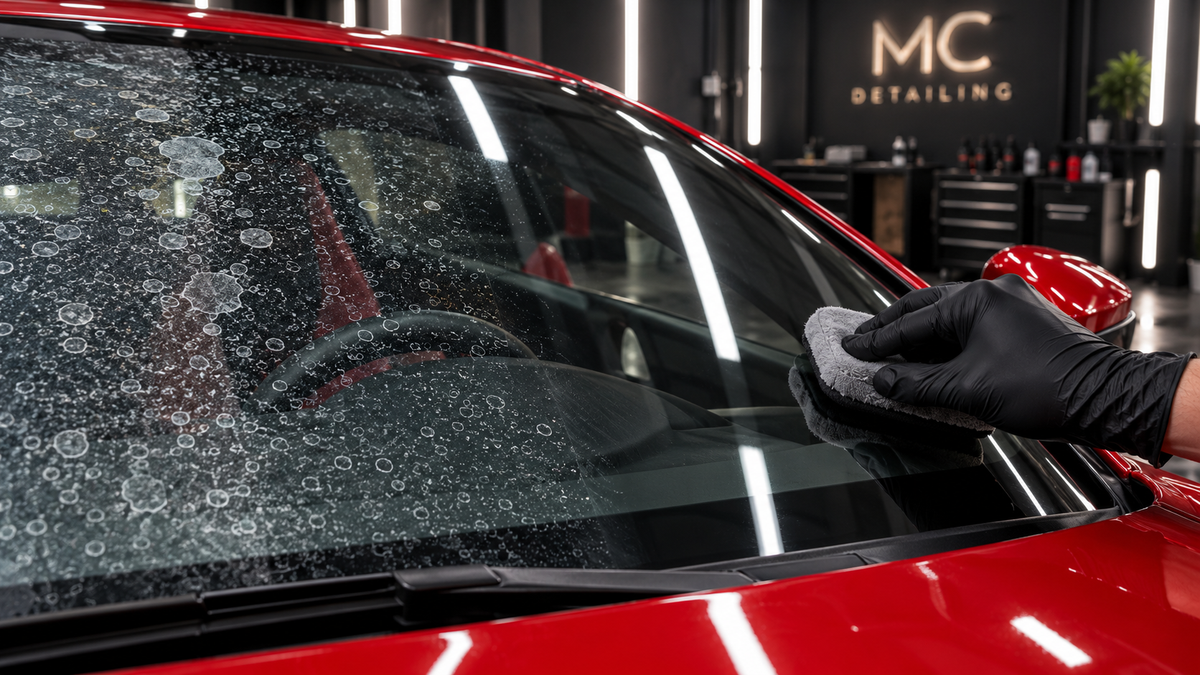
You wash the car, the paint looks great, and then you notice the glass: a hazy, chalky pattern of white rings that no glass cleaner will shift. Those are water spots, and on a windscreen they are more than cosmetic. They scatter light at night, make wipers judder and smear, and get worse the longer they stay.
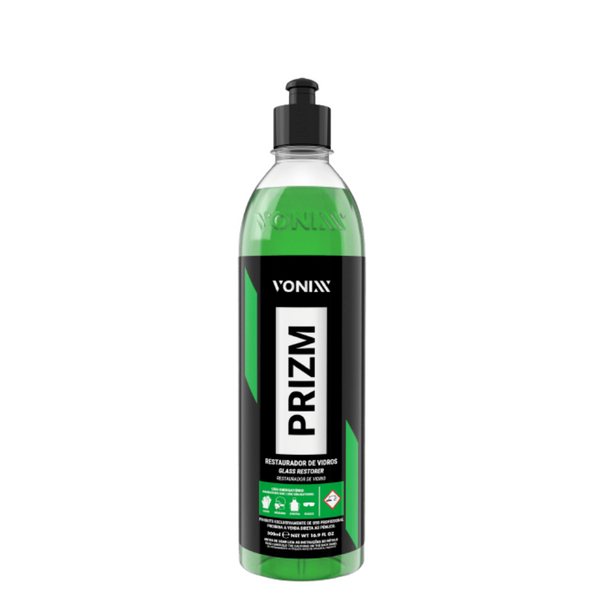
This guide explains what they are, how to tell which type you have, and how to remove them properly with Vonixx Prizm Acid Rain & Water Spot Remover.
What water spots on car glass actually are
When a droplet of water dries on glass, the water evaporates but the dissolved minerals (calcium, magnesium and similar) stay behind. Repeat that through rain, sprinklers, hard tap water, drying in the sun, and the deposits build up and bond to the surface. Acid rain adds to this and can leave a stubborn film. Worn wiper blades and plain washer fluid do not help, because neither can dissolve mineral deposits.
That is why ordinary glass cleaner fails. It is designed for dirt and grease, not mineral scale.
Step 0: check whether you need Prizm at all
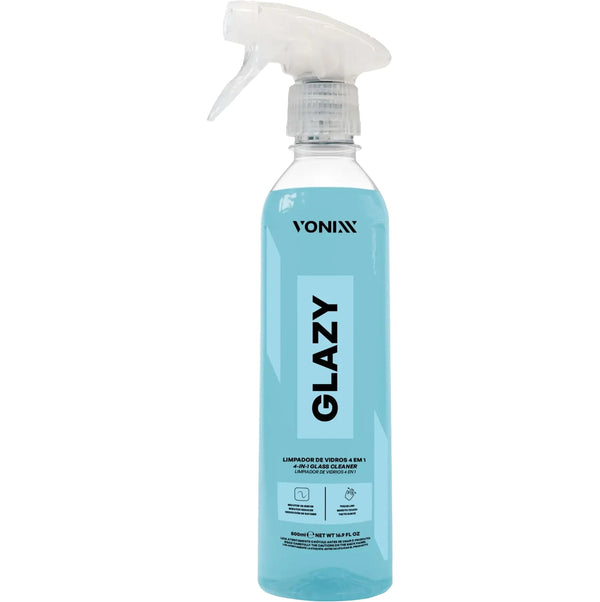
Clean the glass first with Vonixx Glazy and a clean microfibre. If the marks wipe away, you are done and you do not need a spot remover. Prizm is for the marks that are still there afterwards.
A quick feel test helps: run your fingertips lightly over the glass through a thin plastic bag or a clean microfibre. If it feels rough or gritty where the spots are, the deposits are raised and Prizm is the right tool.
What you need
- Vonixx Prizm Acid Rain & Water Spot Remover (ready to use, do not dilute)
- Nitrile gloves and eye protection
- Clean microfibre cloths, one for working and one for finishing
- Plenty of clean water and a hose or pressure washer for rinsing
- Vonixx Glazy to finish, and Glazy Anti-Fog for the inside if it is winter
How to remove water spots with Vonixx Prizm
- Prepare. Put on gloves and eye protection. Prizm is a strong product made for professional use, so treat it with respect. Work in the shade on cool glass.
- Protect the surroundings. Prizm must stay off paintwork, trim, rubber seals and wheels, where it can leave marks that do not come out. Wet the surrounding panels first so any runoff is diluted, and rinse as you go. Masking the edges of the glass with tape is sensible on a windscreen.
- Test a small area first. Always spot test on a small patch before committing to a whole window.
- Apply to a microfibre, not the glass. Put a small amount on the cloth.
- Work in small sections. Rub side to side with moderate pressure on an area no bigger than about 60 x 60 cm, for at least 40 seconds. Do not let the product dry on the glass. If the cloth starts to dry, re-dampen it.
- Rinse thoroughly. Wash the glass off with plenty of clean water so no residue is left behind.
- Check, then repeat if needed. Older, heavier spots may take a second pass.
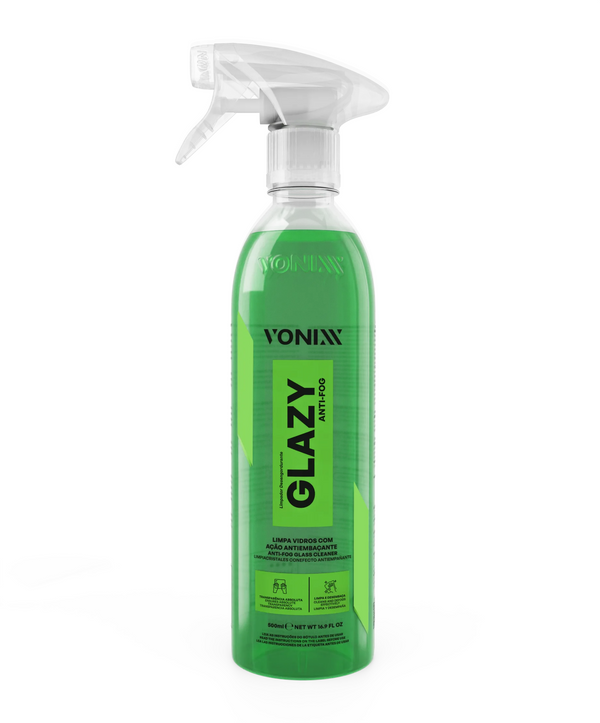
- Finish with Glazy. Clean the glass with Vonixx Glazy for a clear, streak-free finish. On the inside, add Glazy Anti-Fog in winter.
What about water spots on paintwork?
Do not use Prizm on paint. It is a glass product. Water spots on paint are a different job: light spots are mineral deposits sitting on the surface and often come off with a proper wash and a dedicated paint-safe approach, while deeper spots may have etched into the clear coat and need machine polishing. If you are not sure which you have, ask us before you reach for a stronger product.
Where not to use Prizm
- Paintwork, plastic trim, rubber seals and wheels
- Mirrors, headlights and any polycarbonate
- Shower screens and household glass
When the glass is etched
If water spots have been left for a long time, the minerals can etch into the glass itself. Etching is physical damage, so it will not wash off, and a chemical remover can only take away the deposit sitting on top. If the spots are gone but a faint outline remains that you can feel, that is etching and it needs glass polishing rather than more chemical.
How to stop water spots coming back
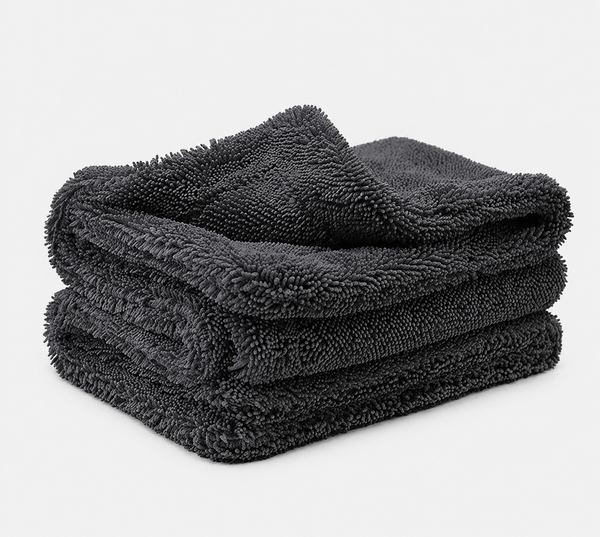
- Dry the glass after washing. Do not let water dry on it, especially in sunshine. A heavy MCX microfibre drying towel lifts the water off in one pass, and our guide to drying your car properly covers the technique.
- Wash regularly. Fresh deposits are far easier to remove than old ones.
- Replace worn wipers. Split or hardened blades smear mineral-rich water across the screen.
- Keep the glass clean with Glazy so new spots do not have a surface to bond to.
Frequently asked questions
Why won't glass cleaner remove water spots?
Water spots are mineral deposits, not dirt. A normal glass cleaner cannot dissolve them, which is why a dedicated remover is needed.
Can I use vinegar on car glass?
Vinegar can soften light deposits, but it can leave residue and it is not as effective on stubborn spots. A purpose-made remover and a good rinse gives a more reliable result.
Is Vonixx Prizm safe on windscreens?
Yes, on automotive glass when used as directed, with gloves and eye protection, and kept off paint, trim and seals.
Do I dilute Prizm?
No. It is ready to use.
Products mentioned in this guide
Quick buy
Quick buy
Quick buy
Quick buy